
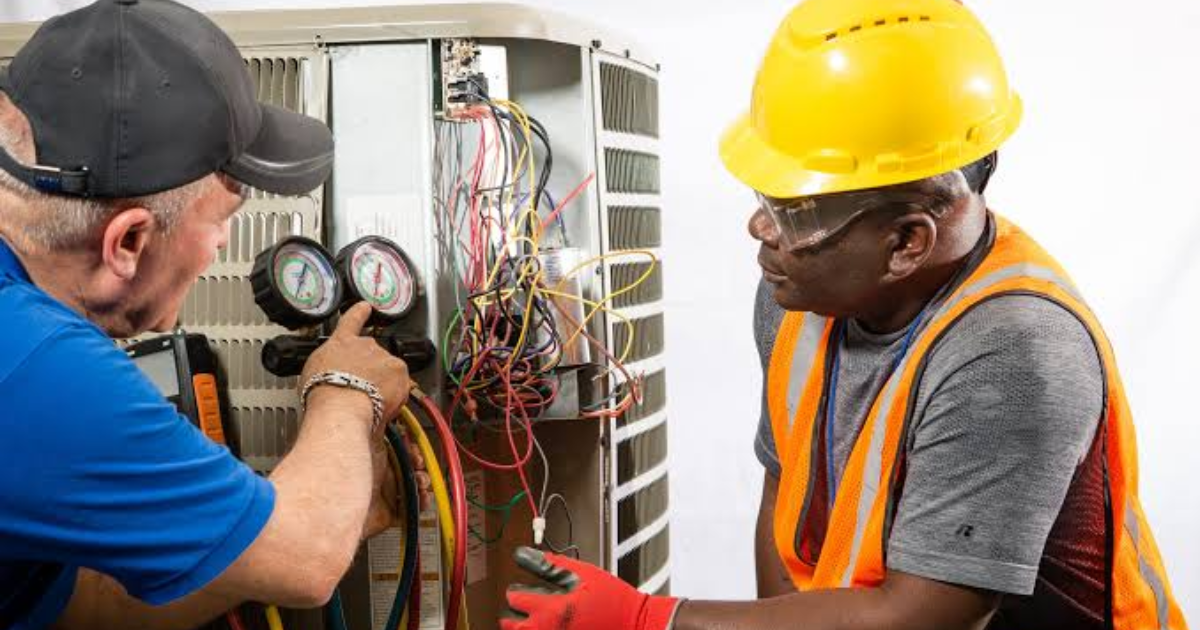
How much do HVAC service technicians make? Discover typical pay, what affects earnings, training paths, overtime, and ways technicians can increase income.
How much do HVAC service technicians make?
Where they work, how much experience they have, the systems they service, and whether they work for an employer or on their own determine their pay ranges.
HVAC technicians can work on furnaces, air conditioners, heat pumps, ventilation systems, and refrigeration equipment, so their skills can cover a wide range of jobs.
For someone considering this career, the advertised wage is only part of the picture.
Overtime, emergency calls, certifications, specialty skills, and experience can all affect total earnings.
The same is true for an experienced furnace repair technician who takes on more complex service work.
Official labor data can give us a useful starting point, but there is no single worldwide HVAC salary.
Here is what affects HVAC pay and what technicians can expect as they build their careers.
What Is the Average HVAC Technician Salary?
There is no single salary that applies to every HVAC service technician.
In the United States, the U.S. Bureau of Labor Statistics (BLS) groups HVAC technicians with heating, air conditioning, and refrigeration mechanics and installers.
Its May 2025 data shows a median annual wage of $61,010, or about $29.33 per hour.
The lowest 10% earned less than $40,050, while the highest 10% earned more than $95,210.
These figures are useful for showing the range, but they should not be treated as a guaranteed salary.
Actual pay can vary greatly by location, employer, experience, and type of HVAC work.
In Canada, the federal Job Bank reports a median wage of $37.50 per hour for HVAC mechanics, with a reported range of $22.00 to $56.00 per hour across Canada.
The underlying wage data uses a 2023–2024 reference period.
These examples also show why it is important to check the labor data for the country and occupation being discussed rather than relying on one global salary figure.
What Affects How Much HVAC Technicians Make?
Several factors can change an HVAC technician’s earnings.
1. Experience
A new technician may start with a lower wage while learning the trade.
As experience grows, the technician may become capable of handling more difficult equipment and troubleshooting problems with less supervision.
That can lead to access to higher-paying roles.
2. Training and Certifications
HVAC work involves electrical systems, refrigeration, controls, heating equipment, airflow, and other technical areas.
Extra training can make a technician more useful to an employer and may open doors to specialized work.
In the United States, BLS says HVAC technicians typically need a postsecondary nondegree award, although some enter the occupation with less formal education and then receive on-the-job training.
In Canada, Job Bank says HVAC mechanic roles commonly require college or apprenticeship training, with some pathways involving two or more years of apprenticeship training.
3. Type of HVAC Work
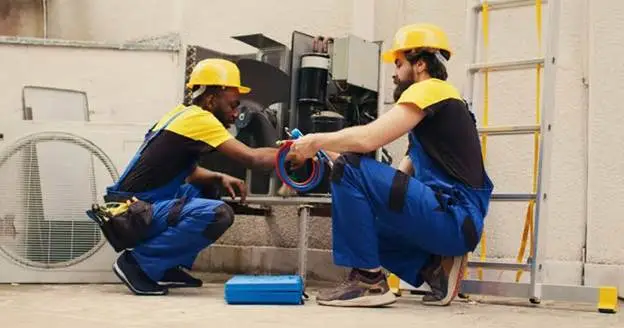
Not all HVAC jobs require the same skills.
A technician may focus on:
- Residential heating and cooling
- Commercial HVAC systems
- Refrigeration
- Heat pumps
- Building automation and controls
- Installation
- Preventive maintenance
- Troubleshooting and repair
Specialized work may require additional training and experience, which can affect earning potential.
4. Employer and Industry
Who employs the technician can also make a difference.
BLS data for the United States shows that HVAC workers are employed across areas such as plumbing, heating and air-conditioning contractors, wholesale trade, retail, and educational services.
In its May 2025 figures, median wages differed between these industries.
So two technicians with similar experience can have different earnings because they work for different types of employers.
Do HVAC Technicians Get Paid More for Overtime?
HVAC demand can change with the weather and workload. A technician may work regular hours during quieter periods but take additional shifts when heating or cooling problems increase.
BLS notes that HVAC technicians may work evenings, weekends, overtime, or irregular schedules, particularly during peak heating and cooling periods.
Emergency service can also create additional earning opportunities, depending on the employer’s pay structure.
However, overtime is not guaranteed.
Some technicians may have steady hours without much additional work.
Can HVAC Technicians Earn More as They Gain Skills?
Skills can affect the type of work a technician is trusted to perform.
For example, someone who can diagnose electrical faults, understand refrigeration systems, work on heat pumps, and troubleshoot complex controls may qualify for jobs that require a broader skill set.
This does not mean every additional skill automatically results in a higher wage.
Pay still depends on the employer, local labor market, qualifications, and job responsibilities.
Is HVAC a Growing Career?

Official U.S. labor data points to continued demand for HVAC workers.
The BLS projects employment for heating, air conditioning, and refrigeration mechanics and installers to grow 11% from 2025 to 2035, compared with 3% for all occupations.
It also projects about 40,600 openings per year on average during that period.
BLS links this demand partly to new construction, replacement of older systems, and the growing use of more sophisticated climate-control equipment.
Job Bank also lists troubleshooting, preventive maintenance, testing, setting up, and repairing among the core competencies for Canadian HVAC mechanics.
What Can Increase an HVAC Technician’s Earning Potential?
For someone already working in HVAC, several steps may help build earning potential over time:
- Gain hands-on experience.
- Learn multiple types of heating and cooling systems.
- Build strong electrical troubleshooting skills.
- Keep required licenses and certifications current.
- Learn newer equipment such as heat pumps and advanced controls.
- Consider commercial or specialized HVAC work.
- Develop good customer service and communication skills.
- Take additional training when it matches local job opportunities.
Technical ability matters, but so does reliability.
Customers and employers need technicians who can diagnose problems carefully, explain the work, and complete jobs safely.
Conclusion
So, how much do HVAC service technicians make?
There is no single answer for every technician.
Experience, training, specialty, employer, overtime, and self-employment can all change what an individual technician earns.
For anyone considering HVAC as a career, the important point is to look beyond a starting wage.
Building useful technical skills and gaining experience can change the type of work you qualify to perform and the pay attached to those roles.